


MACY, Neb. — Erica Carter is keen about her job, and she or he has seven acres of flowers and greens to indicate for it.
Carter’s specialty is reeling in grants to help college students within the Omaha Nation college district, the place she is a finance supervisor. One paid for the backyard that sits subsequent to the district’s campus. One other allowed the varsity system, in one in all Nebraska’s lowest-income counties, to pay college students to keep up it.
“They’re out within the solar. They’re watering vegetation,” she stated. “It’s the primary time they get a paycheck of their life.”
Carter, 41, is paralyzed from the chest down, an damage she’s lived with since a fall in her early 20s. It didn’t gradual her down as she constructed her accounting profession and obtained a grasp’s diploma in human useful resource administration.
However in November 2023, Carter — who lives in Sioux Metropolis, Iowa — obtained a letter from Iowa’s Division of Well being and Human Companies. It stated that her earnings was too excessive for her to remain on Medicaid and that she may lose her advantages in two weeks if she didn’t take motion.
States are scrambling to prepare for a brand new federal requirement to double-check that many individuals on Medicaid qualify for the profit, by displaying they’re working, volunteering, or learning at the very least 80 hours monthly. Politicians’ concentrate on requiring work has angered many individuals with disabilities who’ve Medicaid and say present insurance policies that apply to them have the alternative impact — making them select between working or receiving advantages.

‘I Have No Choices’
When Carter obtained the letter, she was making $110,000 a 12 months, nicely above Iowa’s 2023 earnings restrict for working folks with disabilities: $36,450 for a family of 1.
“I had no time in any respect to arrange,” she stated. “I had a choice to make.”
On the time, Carter obtained her well being protection by way of Iowa’s Medicaid for Employed Individuals With Disabilities, a buy-in program that permits working disabled Iowans to pay a part of their earnings to the state to keep up entry to Medicaid advantages. Forty-seven states supply Medicaid buy-in applications, however most prohibit eligibility by way of limits on earnings and property.
For years, incapacity rights advocates have pushed state legislatures to vary the boundaries, arguing they stop folks like Carter from accepting raises or constructing financial savings, for concern of shedding essential medical advantages. Massachusetts, Minnesota, New Jersey, and Rhode Island have eradicated such limits over the previous 5 years.
To maintain her Medicaid protection, Carter would’ve needed to discover a job paying her far lower than she was making. Or she might drop her Medicaid protection and enroll within the college district’s well being plan. However that plan didn’t cowl most of the disability-related bills that Medicaid did.
Carter determined to maintain her job and go away the Medicaid buy-in program. Ultimately, the choice felt like a no brainer, she stated.
“I like getting up and going to work daily, and I actually like what I do,” she stated. “Why would I throw that away?”
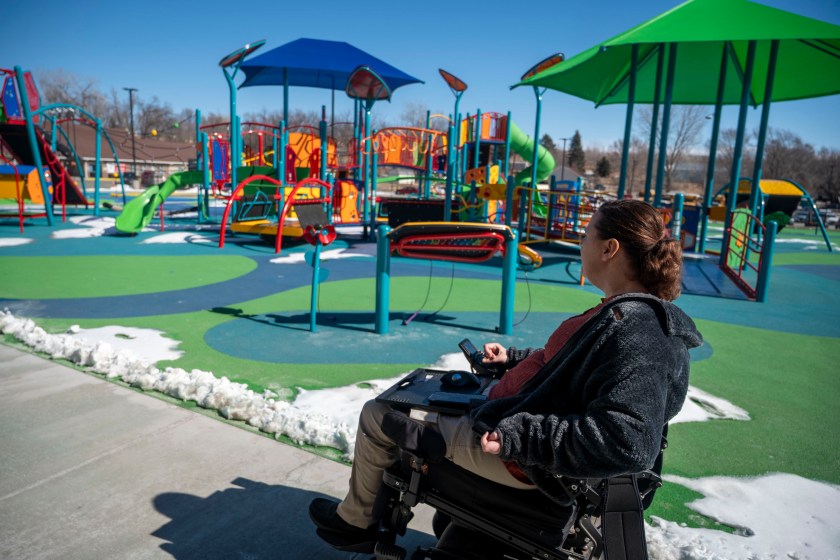
But it surely’s been laborious on her funds. Carter stated she now spends about $35,000 a 12 months out-of-pocket for bills her outdated plan lined, such because the nurse who visits her 3 times every week, modifications to her automotive, and wheelchair repairs.
“I had the motors exit on my wheelchair,” she stated. “In order that was like $4,000 to repair.”
Over the following 12 months, Carter picked up additional jobs and cashed in a few of her retirement financial savings.
“I need to pay my very own means. I don’t thoughts paying taxes,” she stated. She doesn’t need to disguise her earnings, both. “I simply need an possibility,” she stated. “I’ve no choices proper now.”
A Program Supposed To Encourage Work
Congress permitted the choice for states to create Medicaid buy-in applications within the Nineteen Nineties, meaning to incentivize extra folks with disabilities to work. Iowa was one of many first states to undertake this system.
In line with state knowledge, 11,640 Iowans have been taking part within the buy-in program as of late January, or 1.7% of all Medicaid recipients in Iowa.
The earnings caps have inched up since Carter obtained her letter. Iowa’s restrict, set at 250% of the federal poverty degree, is $39,900 for a family of 1 this 12 months.
The foundations additionally prohibit recipients from accumulating an excessive amount of in property. The present cap is $12,000 for a person or $24,000 for a married couple, excluding some property, resembling a main house or automobile.
Carlyn Crowe, the general public coverage supervisor on the Iowa Developmental Disabilities Council, stated the boundaries can stop disabled Iowans from reaching their targets. “Work full-time and be capable to purchase a home, dwell locally, purchase a automotive,” she stated. “These limits positioned on what they’ll earn and save are preserving them from doing that.”
Crowe’s group, which has counterparts in each state, is federally funded and advocates for folks with disabilities. In Iowa, such advocates have requested legislators to drop the laborious limits on earnings and property. As a substitute, they recommend that disabled Iowans pay 6% of their earnings to purchase into the Medicaid program, an strategy modeled after a 2024 Tennessee regulation that created a Medicaid buy-in program with no earnings and asset limits. (Tennessee is ready on federal approval earlier than beginning its program.)
Lately, these efforts have constructed bipartisan help and gained traction. An Iowa Home committee unanimously superior a invoice in 2025 to take away the earnings and asset caps, however the invoice died after failing to maneuver ahead throughout this spring’s legislative session.
State legislatures now face federal reductions in Medicaid spending estimated at greater than $900 billion over 10 years, as a part of the One Large Lovely Invoice Act.
Alice Burns, an affiliate director of KFF’s Program on Medicaid and the Uninsured, stated the particular fear is that buy-in applications, although they’re a small a part of the bigger Medicaid system, might improve total Medicaid spending if eligibility adjustments.
“The premiums charged in buy-in applications are nowhere close to near the anticipated prices of overlaying folks,” Burns stated. (KFF is a well being coverage analysis, polling, and information group that features KFF Well being Information.)
Specializing in preliminary value will increase is myopic, stated Daniel Van Sant, the director of incapacity coverage at The Harkin Institute at Iowa’s Drake College. Extra staff imply extra earnings tax income for states. It additionally permits some folks with disabilities to earn sufficient to transition off different authorities help applications, such because the Supplemental Diet Help Program.
“Three, 5, seven years from now, you might be recouping these bills by having folks be capable to work their means off,” Van Sant stated.
Falling By means of the Cracks
Iowa lawmakers tried a extra modest adjustment throughout this 12 months’s legislative session. As a substitute of eradicating the earnings restrict totally, they launched laws that may increase the cap to 300% of the federal poverty degree and exempt pension accounts and a partner’s earnings, amongst different issues, from the asset cap.
Ultimately, the availability was stripped from a wide-ranging public help invoice. If it had handed, the brand new earnings restrict would have been one of many highest within the nation for a buy-in program, in accordance with KFF.
Alex Watters, a former Metropolis Council member in Sioux Metropolis who was paralyzed from the chest down after a diving accident, instructed state lawmakers throughout a listening to in February that the proposal was a step in the best route, however not sufficient.
“I concern that we’re going to lose folks to different states,” stated Watters, who added that he was contemplating shifting to Minnesota, which by no means had an earnings cap and eradicated asset caps for its Medicaid buy-in program in 2024.
Even when Iowa had raised its earnings restrict, Carter would nonetheless have been ineligible.
Carter stays dedicated to her main job on the college district. She plans to maintain working there and taking up extra jobs, seven days every week, so she will be able to pay for her medical wants and proceed serving to college students.
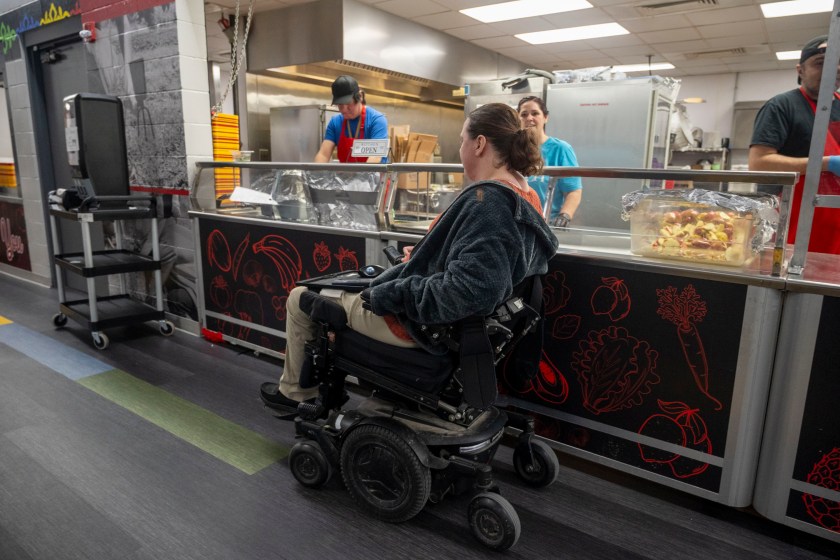
This text is from a partnership that features Iowa Public Radio, NPR, and KFF Well being Information.


